


Low Sodium Diet For Menière's Disease: What I Try to Stick To...
Updated: 1 day ago
When I was newly diagnosed, "just try a low sodium diet for Menière's disease" was the advice I heard from pretty much everyone, from my ENT consultant to strangers in Facebook groups.
What nobody explained properly was how much salt, why it mattered, or what I was actually meant to eat instead. So I worked it out the hard way, and this is everything I wish someone had handed me on day one.
Why salt can make Menière's symptoms worse
Menière's is thought to be caused by a build-up of fluid pressure in the inner ear, and salt plays a direct role in that. Sodium makes your body hold onto more fluid, and because the inner ear is so sensitive to fluid changes, that extra retention can tip the balance towards an attack.
This is why both the NHS and the Menière's Society (now Menière's & Vestibular UK) list dietary changes, including cutting back on salt, as one of the first things worth trying to manage symptoms.
I'll be honest with you though, because that's the whole point of this site: there isn't strong trial evidence proving a low salt diet definitely reduces attacks, and researchers openly admit more high-quality studies are needed.
What we do have is decades of patient experience, including my own, and a physiological explanation that makes sense.
For me, cutting salt was one of the few changes that made a genuine difference. That doesn't mean it will work exactly the same way for you, but it's worth a proper trial.
How much salt should you actually be eating?
This is the bit that trips people up. A general low salt diet for Menière's disease usually means somewhere around 1,000 to 1,500mg of sodium a day, which works out at roughly half to three quarters of a teaspoon of salt in total, from everything you eat, not just what you add at the table. That's a lot lower than most people in the UK are used to.
For me I can manage my symptoms by sticking to 2000mg of salt/sodium per day.
Start by taking the salt shaker off the table completely and getting comfortable reading nutrition labels, since the majority of the sodium we eat is hidden in processed food rather than added at home. And you'll be surprised how many foods it's added to that you wouldn't think would!
Addressing the fear that comes with a new diagnosis
If you've just been diagnosed, there's a good chance you're scared. Scared of the next attack, scared of eating the "wrong" thing and triggering it, scared that your whole life now revolves around a food label. I remember that feeling well.
A few reassurances that genuinely helped me:
Getting it wrong occasionally will not undo weeks of progress. One salty meal is usually not a diagnosis-ending mistake, but you will learn your limits as you go along.
Symptoms fluctuate for almost everyone with this condition, so a bad day doesn't always mean the diet "isn't working."
You don't need to overhaul everything overnight. Small, consistent changes add up far more than a perfect week followed by burnout.
It takes time, often a few weeks, before you notice any real benefit from dietary changes, so give it a fair trial before judging it.
Small wins that make it easier
You don't need to become a nutritionist to manage this. A few habits that made the biggest difference for me:
Swapping table salt out completely rather than trying to "use less"
Batch cooking from scratch so I always had a low sodium option in the freezer for bad days
Rinsing canned vegetables and pulses before using them
Keeping a small list of "safe" low sodium snacks so I wasn't caught out and reaching for crisps (or the crisps where you add the salt yourself are perfect to keep in!).
Checking bread and cereal labels, since these are sneaky sources of sodium that don't taste salty at all
None of these need to happen all at once. Pick one this week.
Low salt recipes for Menière's disease: Breakfast edition
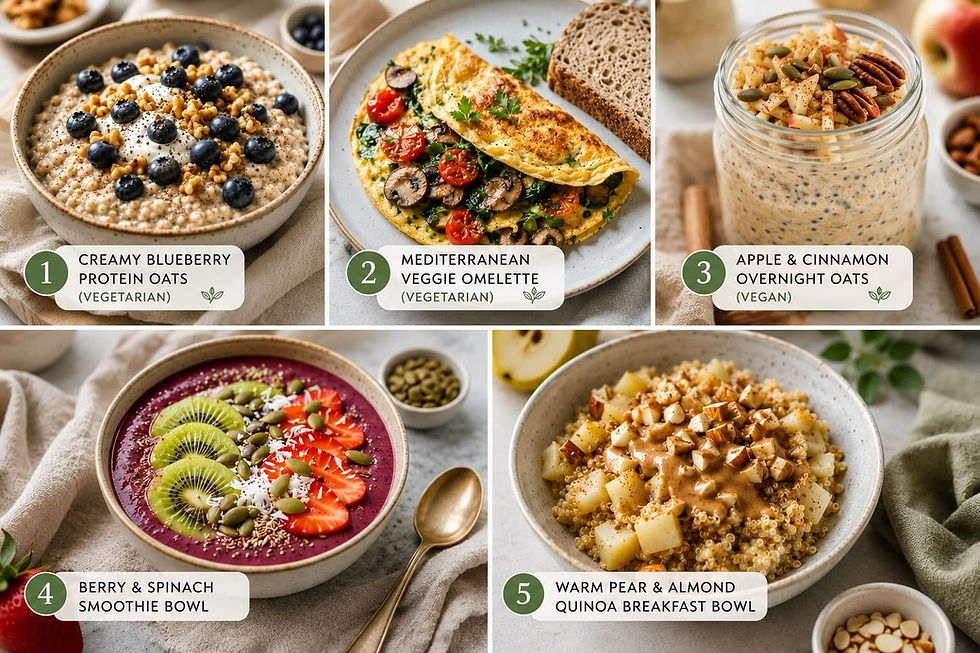
Breakfast is a good place to start because it's usually the meal with the least emotional attachment, and processed breakfast foods (bacon, sausages, some cereals) are some of the worst offenders for hidden sodium. Here are five that I recommend giving a try. And they are also easy to adapt to your own taste.
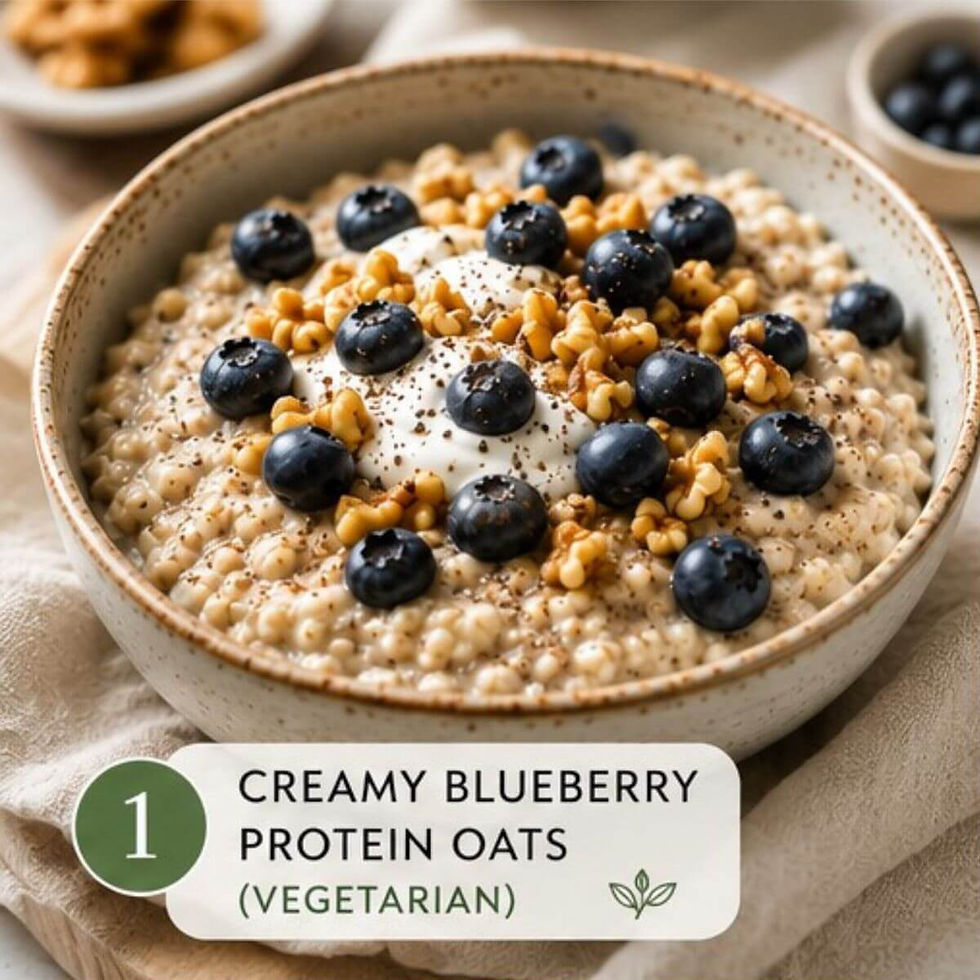
Creamy blueberry protein oats (vegetarian)
Perfect for a filling breakfast that keeps you satisfied for hours.
You'll need:
50g rolled oats
200ml semi-skimmed milk (or unsweetened plant milk)
1 tbsp chia seeds
½ tsp cinnamon
80g fresh blueberries (or use frozen ones, they will defrost quickly if you add them while the oats are warming up)
2 tbsp Greek yogurt
1 tsp maple syrup (optional)
1 tbsp chopped unsalted walnuts.
Cook the oats with the milk until creamy, stir through the chia seeds and cinnamon, then top with yogurt, blueberries and walnuts.
Naturally low in sodium, high in fibre, and the protein helps keep your blood sugar steady, which matters if you notice dizziness links to hunger.
Mediterranean veggie omelette (vegetarian)
Perfect for a protein-rich savoury start to the day.

You'll need:
2 eggs
1 tsp olive oil
½ courgette diced
a handful of mushrooms
halved cherry tomatoes
fresh parsley
black pepper
a pinch of smoked paprika.
Sauté the vegetables in the oil, pour the beaten eggs over, cook until set, and finish with parsley. Serve with a slice of low sodium wholemeal toast or just on its own!
No processed meats involved, so it stays naturally low salt.
Apple and cinnamon overnight oats (vegan)
Perfect for busy mornings when you have zero time.

You'll need:
50g rolled oats
200ml unsweetened oat milk
1 tbsp chia seeds
½ grated apple
½ tsp cinnamon
1 tbsp pumpkin seeds
1 tbsp chopped pecans
Mix everything except the nuts, refrigerate overnight, then top with pecans before eating.
Fully vegan, high in fibre, and the slow-release carbohydrates help keep energy stable through the morning.
Berry and spinach smoothie bowl
Perfect for warmer mornings when a hot breakfast doesn't appeal.

You'll need:
150g frozen mixed berries
½ banana, a handful of spinach
150ml unsweetened almond milk
2 tbsp Greek yogurt (or vegan yogurt)
1 tbsp ground flaxseed.
Top with kiwi slices, strawberries, unsalted pumpkin seeds and unsweetened coconut flakes.
Blend until thick, spoon into a bowl, and add your toppings.
Naturally caffeine free too, which is useful if caffeine is one of your triggers alongside salt.
Warm pear and almond quinoa bowl
Perfect for when you want something different from oats.

You'll need:
75g cooked quinoa
150ml unsweetened almond milk
1 ripe pear diced
½ tsp cinnamon
¼ tsp vanilla extract
1 tbsp almond butter
1 tbsp chopped unsalted almonds.
Heat the quinoa with the almond milk, stir through the cinnamon and vanilla, fold in the pear, then top with almond butter and almonds.
Gluten-free, high in plant protein, and low sodium throughout.
Tips for a Menière's-friendly breakfast
A few general rules that apply across all of these:
Choose fresh ingredients over processed breakfast foods wherever you can (frozen ingredient are often cheaper)
Avoid adding extra salt during cooking, even out of habit
Skip processed meats like bacon and sausages, which are among the biggest hidden sodium sources. Or save them for one day of the week and adapt the rest of the days meals accordingly
Pair carbohydrates with protein and healthy fats to help keep blood sugar steady - an example is eggs on toast with avocado. Or a rice cake with peanut butter.
Opt for caffeine-free drinks such as herbal tea or warm lemon water if caffeine is also a trigger for you. I love Pepsi Max Caffeine Free, it tastes just the same as regular Pepsi.
Check labels on bread, cereal and plant milks, since sodium levels vary hugely between brands
None of this needs to be perfect. It just needs to be consistent enough that your inner ear gets a break from the fluid swings that salt can cause.
You don't have to work this out alone
I built this site and our free community because I remember exactly how overwhelming those first few months were, wading through conflicting advice with no idea what was actually worth trying. If you want more low salt recipes for Menière's disease as I add them, along with the practical, lived-experience stuff that doesn't make it onto NHS leaflets, join the free community today.
Health Disclaimer
This article is for informational purposes only and based on personal experience. It does not replace medical advice. Always consult a qualified healthcare professional before making changes to your diet, medications, treatment plan or start any kind of exercise regime.
Hi, I'm Sally - a Nutritional Therapist and chronic illness blogger who has been living with Menière's disease, TMJ Disorder and Degenerative Disc Disease for over twenty years. I write about the real experience of managing these conditions day to day, blending personal insight with nutritional and lifestyle knowledge. I hope something here helps you feel a little less alone.


